
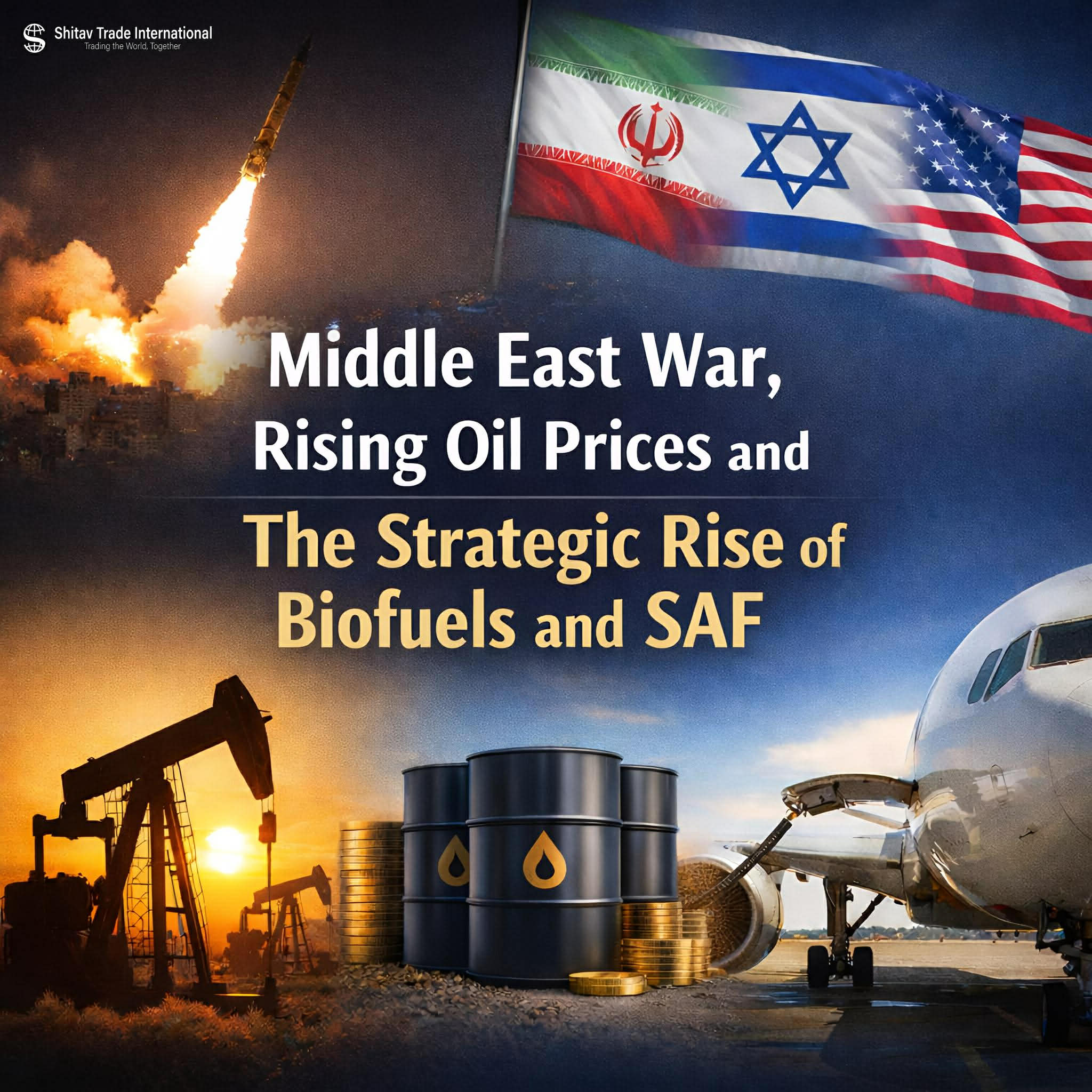
Middle East Tensions and Oil Price Shocks: Why Biofuels and SAF Matter More Than Ever!
Posted on: 06 Mar, 2026
The escalating confrontation between US-Israel and Iran is once again highlighting a major vulnerability in the global energy system: heavy dependence on Middle East oil. Around 20% of the world’s oil supply passes through the Strait of Hormuz, making any geopolitical escalation in the region a direct risk to fuel supply and global prices.
Oil Price Risk and Energy Security
Military tensions in the region immediately trigger risk premiums in crude oil markets. Traders anticipate possible supply disruptions, shipping risks, or sanctions. Even if physical supply is not disrupted immediately, speculation alone can drive oil prices higher.
Historically, geopolitical conflicts in the Middle East—such as the 1973 Oil Crisis and the Gulf War—have led to sharp spikes in fuel prices and forced countries to rethink energy security. The current situation could create a similar strategic shift.
Higher Fossil Fuel Prices Boost Biofuel Competitiveness
When crude oil and refined fuels become expensive, biofuels become economically more competitive.
Key biofuels affected include:
Biodiesel
Renewable diesel
Ethanol
Sustainable Aviation Fuel (SAF)
Production margins for these fuels improve when fossil fuel prices rise, encouraging higher blending mandates, production expansion, and investment in biofuel infrastructure.
Feedstock markets often react early. Prices for:
Used cooking oil (UCO)
Soybean oil
Palm oil
Other Vegetable oil
Animal fats
typically increase because refiners and biofuel producers secure supply for future fuel production.
Aviation Sector: SAF Demand Could Accelerate
The aviation industry is highly sensitive to jet fuel price volatility. Jet fuel normally represents 20–35% of airline operating costs.
As geopolitical tensions push up fossil jet fuel prices, airlines and fuel suppliers increasingly explore Sustainable Aviation Fuel (SAF) as both a cost-hedging tool and a decarbonization strategy.
SAF is already gaining momentum due to climate policies in regions such as:
European Union (ReFuelEU Aviation mandate)
United States (SAF tax credits under the Inflation Reduction Act)
Singapore, Indonesia and Japan SAF blending initiatives
If fossil jet fuel becomes more volatile due to geopolitical conflicts, SAF investments may accelerate even faster.
Long-Term Structural Shift
Global energy markets are already transitioning toward diversified fuel sources. According to industry forecasts, SAF demand could reach 8–10 billion liters annually by 2030, with strong growth continuing through 2040.
Geopolitical shocks—like the Israel–Iran conflict—often act as catalysts that accelerate existing energy transitions, rather than creating entirely new trends.
Strategic Implications for Emerging Markets
Countries in Asia, Africa and Latin America with strong agricultural sectors could benefit from rising biofuel demand. Feedstocks such as:
agricultural residues
waste oils
energy crops
could become more valuable as global demand for alternative fuels increases.
US-Israel–Iran Tensions, Rising Fuel Prices, and the Biofuel Opportunity for Bangladesh
Escalating tensions between Israel and Iran highlight a key vulnerability in the global energy system: dependence on Middle Eastern oil. Nearly 20% of global oil trade passes through the Strait of Hormuz, meaning any disruption can quickly push fuel prices higher worldwide.
Bangladesh Perspective
For Bangladesh, which relies heavily on imported petroleum, rising global fuel prices can increase pressure on energy subsidies, inflation, and transportation costs. Geopolitical shocks in the Middle East therefore directly affect the country’s energy security and economic stability.
This situation strengthens the strategic case for alternative fuels such as biofuels and Sustainable Aviation Fuel (SAF). Bangladesh has potential feedstocks including agricultural residues, used cooking oil, and other biomass resources that could support a domestic biofuel industry.
Developing biofuels would not immediately replace imported fossil fuels, but it could help diversify energy sources, reduce exposure to global oil price shocks, and create new agricultural value chains.
Conclusion
The US-Israel and Iran conflict highlights how fragile global oil supply chains remain. While biofuels and SAF cannot immediately replace fossil fuels, rising fuel prices and geopolitical uncertainty strengthen the economic and strategic case for alternative fuels.
In the long run, conflicts in oil-dependent regions may accelerate investment, policy support, and market demand for biofuels and sustainable aviation fuel worldwide.
Written & Edited By
Shitav Trade International © 2026
Share This
Recent Posts
-
Middle East Tensions and Oil Price Shocks: Why Biofuels and SAF Matter More Than Ever!
-
 Laldia APM Terminal: A Step Toward a Smarter Port Future
-
 The Terminator and Today’s AI: How a 40-Year-Old Movie Predicted Our Future
-
 Why Do Promising Startups Turn Into Scams? Lessons from Evaly and Flight Expert
-
 Bangladeshi Agriculture: A World of Opportunities
Comments (0)
Post Your Comment